We just left 1979, with D. Hofstadter being skeptical and not at all enthusiastic of a chess computer. Unimpressed by the opinions of the American scientist, in the German city of Munich, exactly at the same time, a small company just hired two programmers to bring to the market the first portable chess computer.
Chess was quite popular at that time. The famous Spassy-Fischer match of 1972 had been an incredible world-wide drama. Subsequently, Fischer started his path into madness, was deposed and the rivalry between the two soviet giants Karpov and Kasparov began.
So, a short time after the introduction of the first personal computers, in the middle of a world-wide chess pandemic, you could by a small box of plastic, which was able to play chess at the level of a mediocre, but loyal and always available club player. It was called Mephisto I.
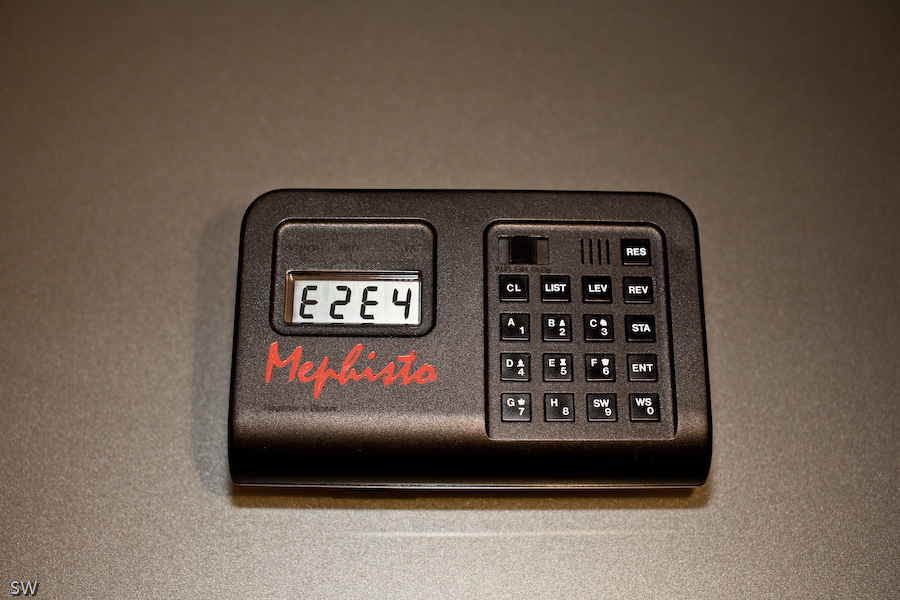
Mephisto I was a real blockbuster. You could buy for 500 DM (or 500 € of today), well below the price of a personal computer back then. It would help you going through tactical variations in post-morten analyses of games during chess-club evenings. They would sell 100.000 pieces per year only in Germany. The company producing the Mephisto, Hegener + Glaser AG, enjoined 10 years of almost complete monopoly of the chess computer market, and the financial reward coming from it.
And as it often happens, they were killed by their own inertia. The market was changing: more and more chess computers were available, the once esoteric mystery of alpha-beta search well known, and most important, the 486 entered the scene. A 486 with a decent chess program could reach chess levels worth of a national master. You could'nt bring it to the club, right. But for correspondence player it was a cheap insurance against tactical blunders. Chess programs entered the life of serious chess players and their moral authority dictated that Mephisto and all portable computers should be abandoned by the weaker chess players, or be condemned not to learn chess in their entire life. So they abandoned.
Why did'nt Hegener + Glaser AG see this coming? They had the professional chess programmers, they should have noticed at latest in 1989, as no chess computers entered the world computer chess championship or in 1991 when Mephisto lost the title to a software version of itself. Nobody knows.
H + G survived until 1994, and here we leave them and their 28 million DM of debts as a further victim of the endless race ordered by her majesty the Red Queen.